
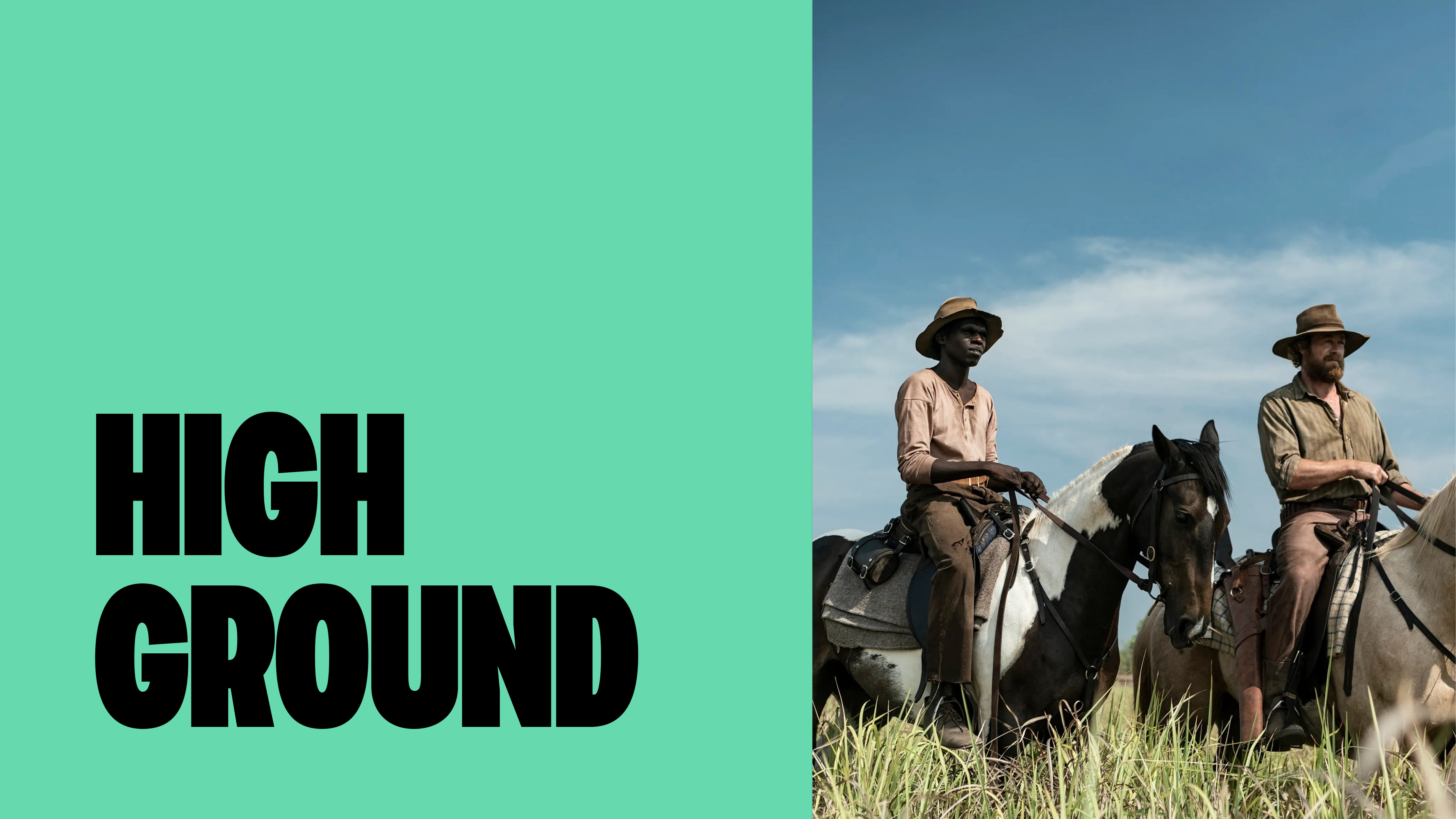
The Power of the Camera and Historical Documentation in High Ground
In High Ground, director Stephen Maxwell Johnson explores how colonial violence is not only enacted through physical force, but also through the act of recording history. The camera becomes a powerful symbol of control, shaping how events are remembered and understood. Through deliberate use of shot types, scenes involving photography, and visual parallels between the camera and firearms, the film suggests that documentation can function as both evidence and weapon. Ultimately, High Ground presents the camera as a tool of authority that reflects power, truth, and moral responsibility.
Documentation as a Tool of Colonial Power
The introduction of photographic technology into colonial environments reflects how documentation became an instrument of power, shaping both historical record and perception. Throughout High Ground, the camera is associated with colonial authority, as those in positions of power control what is seen and preserved. For example, when the colonial photographer prepares to take photographs of Indigenous individuals, POV shots from behind the camera lens emphasise the controlled and deliberate nature of documentation. In contrast, medium shots of the photographed subjects show them standing still, with little control over how they are represented. This contrast reinforces the imbalance of power between observer and subject. The act of photographing becomes symbolic of colonial control, as Indigenous individuals are reduced to objects of documentation rather than active participants in their own history.
Furthermore, when photographs are taken within the film, the camera is treated with precision and seriousness, reflecting its perceived importance as a tool of truth. However, this apparent objectivity is misleading. The act of photographing becomes selective, capturing only what colonial authorities choose to document. After the successful crocodile hunt, Moran photographs Travis with the Indigenous workers but instructs them to kneel beside him rather than stand. This positioning presents Travis as superior, despite the Indigenous workers sharing equal responsibility for the hunt. By showing how photographic documentation is framed, controlled, and limited, the film demonstrates that historical records are shaped by those who hold power, reinforcing colonial dominance beyond physical violence.
Stephen Johnson’s Camera
The film further develops this idea through Stephen Johnson’s use of shot size to reveal who holds power during moments of violence. In the opening massacre, Johnson uses close-ups to frame Travis and his sniper rifle but uses wide shots to frame the Yolngu community by the river. This framing places the armed colonial figure in a position of visual control, while the Indigenous victims appear vulnerable. The audience’s attention is drawn to the weapon and Travis’ authority, reinforcing the imbalance of power. By using shot size to emphasise the presence of armed officers and the exposure of Indigenous characters, Johnson demonstrates how visual framing conveys colonial dominance.
Additionally, point-of-view shots simulate the perspective of the camera lens, positioning the audience as participants in the act of documentation. This technique forces viewers to recognise their own role as observers, mirroring the colonial gaze. The stillness required during photography also contrasts with the movement and vitality of everyday life, symbolising how documentation freezes individuals into fixed historical representations. Through these visual techniques, the film reveals that the camera does not only capture identity, but also defines and restricts it.
The Camera and the Gun: Parallel Instruments of Control
Intricately, High Ground establishes a clear symbolic parallel between the camera and the gun through Moran’s authoritative commands when photographing Indigenous people. Moran orders his subjects to “Get down!” and “Hold still!”, using direct and forceful language that strips them of agency and reduces them to controlled objects within his frame. These commands mirror the verbal authority used when aiming a weapon, reinforcing his dominance over Indigenous lives. His instruction for them to remain still reflects how the camera, like a gun, imposes compliance and submission. Through Moran’s controlling tone, the film suggests that the camera functions as a tool of colonial power, allowing him to dominate not through physical violence, but through the ability to define how Indigenous people are seen and remembered in history.
Just as a gun can end a life, a photograph can permanently define how a life is remembered. The finality of both actions reinforces their symbolic connection. By visually aligning the camera with the gun, the film suggests that documentation can be as powerful as physical violence, shaping not only immediate outcomes but also long-term historical memory. This parallel highlights how colonial power operates through both force and representation to ensure control.
Conclusion
High Ground demonstrates that the camera is not just a passive recording device, but a powerful symbol of authority that shapes historical truth. Through the use of close-ups to highlight colonial dominance, wide shots that expose the vulnerability of photographed subjects, and visual parallels between cameras and firearms, the film reveals the relationship between documentation and power. The camera becomes a metaphorical weapon, capable of controlling how individuals and events are remembered. By presenting documentation as both an act of observation and domination, the film encourages viewers to question the reliability of historical records and to recognise the role of power in shaping collective memory.